Punishment under Section 138 of the Negotiable Instruments Act can extend to imprisonment for up to two years, a fine of up to twice the cheque amount, or both. In practice the contest is rarely about the punishment: it is about whether the cheque represented a legally enforceable debt or liability, and whether the statutory notice and filing deadlines were met. The law presumes the cheque was issued for a debt, and it is for the accused to displace that presumption. The offence is compoundable, so settlement remains available throughout.
Cheque bounce case punishment under Section 138 of the Negotiable Instruments Act can include imprisonment up to two years, fine up to twice the cheque amount, or both. In practice, the real contest is often about whether the cheque represented a legally enforceable debt and whether the complainant complied with the strict notice and limitation requirements.
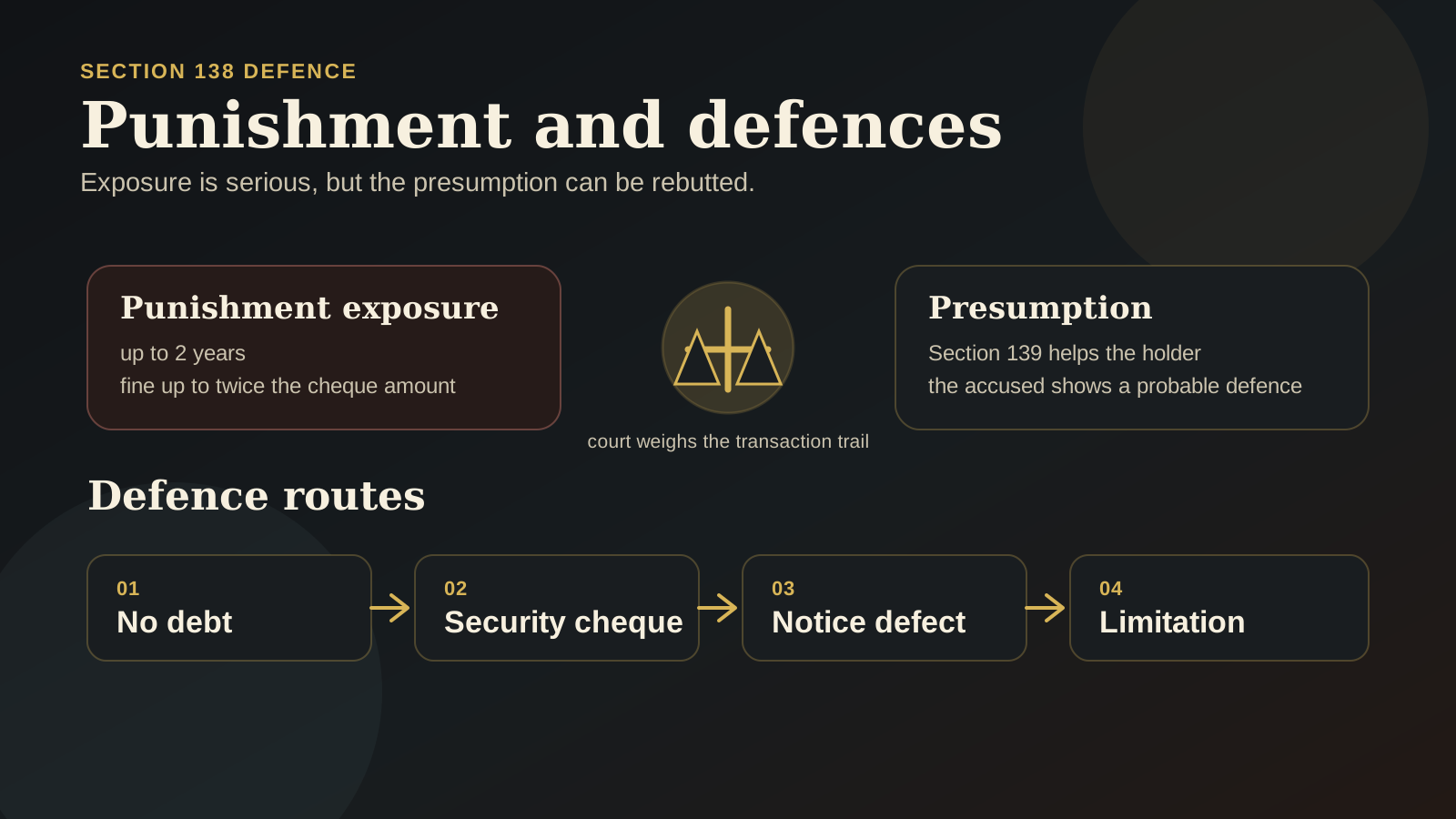
The punishment framework
Section 138 criminalises dishonour of a cheque for insufficiency of funds or similar reasons, provided the cheque was issued towards a legally enforceable debt or liability. The complainant must present the cheque within validity, issue a demand notice within the statutory period after dishonour, wait for non-payment, and file the complaint within limitation. Sentencing varies: courts may impose compensation, fine, imprisonment, or accept compounding.
Presumption and accused-side defences
Sections 118 and 139 create a presumption in favour of the holder that the cheque was issued for consideration and discharge of liability. The accused does not need to prove the defence beyond reasonable doubt; a probable defence can rebut the presumption. Documentary consistency is crucial.
- the cheque was a security cheque and no debt crystallised;
- the alleged debt is time-barred or unproved;
- the statutory notice was not served or was defective;
- the complaint was filed beyond limitation;
- the amount claimed exceeds the actual liability;
- the signature, authority or company role is disputed;
- the cheque was materially altered.
Cheque bounce case in favour of accused
Acquittals usually turn on contradictions in the complainant's version, absence of books or invoices, failure to prove advancement of funds, mismatch between notice and complaint, or successful explanation of why the cheque was issued. Cross-examination should be planned around the transaction trail, not just general denial.
Settlement and compounding
Because Section 138 is compoundable, settlement remains practical at every stage. The Supreme Court's graded-cost approach discourages late settlements but does not bar them. Accused persons should evaluate settlement alongside defence strength, exposure to compensation, and business relationship costs.
For filing-side timelines and bounced cheque charges, read the main guide on cheque bounce case in India.
Frequently asked questions
What is the punishment in a cheque bounce case?
Section 138 NI Act allows imprisonment up to two years, fine up to twice the cheque amount, or both. Many cases resolve through settlement or compounding.
Can an accused win a cheque bounce case?
Yes. Defences include absence of legally enforceable debt, defective notice, limitation issues, material alteration, security cheque facts and rebuttal of statutory presumptions.
Need a cheque bounce notice or defence reviewed?
Share the cheque, return memo, notice, proof of delivery and transaction documents for a focused Section 138 assessment.
Case ReviewDefences must be raised at the right stage — see how a Section 138 defence lawyer in Delhi structures a Section 138 defence.