Short answer. In a 498A case, anticipatory bail is usually about preventing unnecessary arrest while showing cooperation with investigation. A strong bail record identifies the exact stage of the complaint or FIR, answers the Arnesh Kumar arrest factors, separates specific allegations from vague family-wide allegations, and places documents before the court showing residence, cooperation, prior proceedings, settlement context and absence of custodial necessity.
Anticipatory bail 498A searches usually happen at a stressful moment: a complaint has reached the police, the Crime Against Women Cell has called the family, or an FIR under Section 498A IPC or Sections 85-86 BNS is feared. The immediate question is narrow: how do you prevent unnecessary arrest while the dispute is investigated?
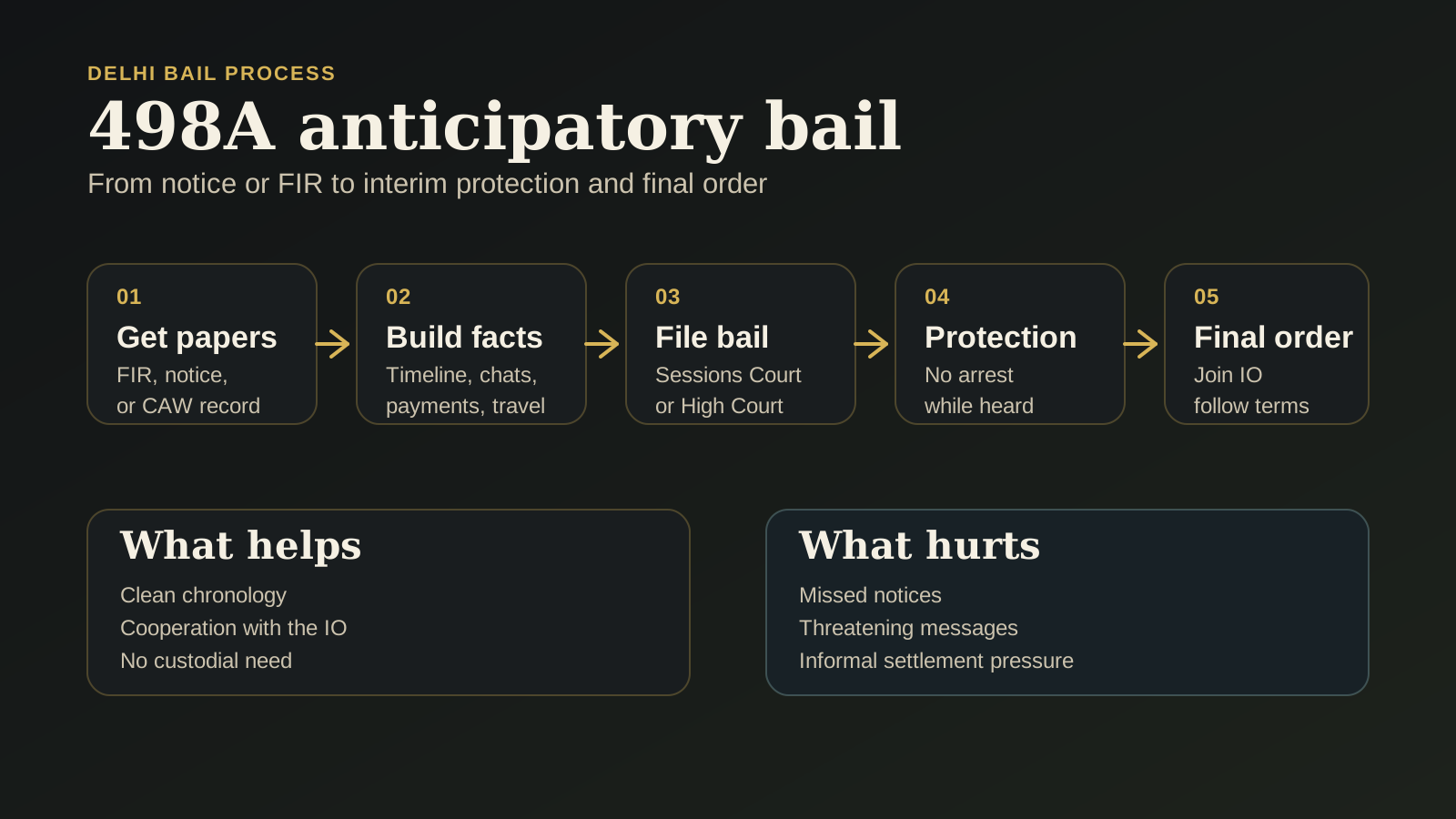
In Delhi, the answer depends on speed, documents and restraint. Courts are alert to both sides of the problem: genuine cruelty complaints need investigation, but automatic arrest in every matrimonial complaint is contrary to the Supreme Court's decision in Arnesh Kumar v. State of Bihar. A good bail petition therefore does not merely deny the case. It shows why custodial interrogation is unnecessary, why the applicant will cooperate, and why the complaint has a matrimonial or settlement context that can be investigated without arrest.
Step 1: identify the exact stage of the 498A case
The strategy changes depending on whether there is only a CAW Cell complaint, a police notice, a registered FIR, or a summons after chargesheet. Before filing, collect the complaint, any notice, WhatsApp or email correspondence, prior family-court pleadings, settlement talks, medical records relied upon by the complainant, and proof of residence or employment. Courts are less persuaded by emotional denials than by a clear chronology.
Step 2: build the Arnesh Kumar record
Arnesh Kumar requires police to ask whether arrest is necessary to prevent further offence, prevent tampering, secure attendance, or enable investigation. A 498A anticipatory bail petition should answer each point: the accused is available, has joined inquiry, will provide documents, will not contact witnesses except through lawful channels, and can comply with any condition. Where the complaint names distant relatives with vague allegations, that distinction should be made early.
Step 3: show cooperation, not confrontation
Bail courts look closely at conduct. If a notice under Section 41A CrPC or the corresponding BNSS provision is received, appear through counsel or as directed, preserve proof of attendance, and avoid direct pressure on the complainant. Refusing to join inquiry can turn an otherwise manageable case into an arrest-risk case.
Common bail conditions in 498A cases
- joining investigation as and when called;
- not threatening or contacting witnesses;
- providing address and mobile details;
- not leaving India without permission in serious cases;
- depositing stridhan articles when specifically identified and admitted.
Conditions should be workable. If the police seek a blanket direction to deposit disputed jewellery or money, the response must separate admitted articles from contested allegations. Bail is not a recovery proceeding, but courts may impose cooperation conditions where property is clearly identifiable.
Bail, mediation and quashing work together
In many cases, anticipatory bail is only the first procedural shield. The long-term route may be mediation, mutual consent divorce, or quashing under Section 482 CrPC / Section 528 BNSS after settlement. Where allegations are vague and omnibus, quashing may be considered even without settlement, especially for extended family members.
For the broader law, read the Section 498A IPC explained guide. For practical first steps after an FIR, see false 498A filed against you.
Frequently asked questions
Is 498A non-bailable?
Yes. Section 498A IPC and its BNS successor in Sections 85 and 86 are treated as non-bailable offences. An accused who apprehends arrest usually seeks anticipatory bail from the Sessions Court or High Court.
Does Arnesh Kumar stop arrest in every 498A case?
No. Arnesh Kumar does not grant automatic immunity. It requires police to justify arrest under the statutory checklist and requires Magistrates to scrutinise detention. Serious facts may still justify arrest.
Can 498A be quashed after settlement?
Yes. High Courts routinely quash 498A proceedings after a genuine matrimonial settlement or mutual consent divorce, even though the offence is formally non-compoundable.
Need urgent 498A anticipatory bail advice?
Share the complaint, FIR details, police notice and a short chronology so the arrest risk and next filing step can be assessed.
Case ReviewTiming and preparation decide most 498A bail matters — see how an anticipatory bail lawyer in Delhi prepares the application before the first listing.