Short answer. An online Will in India is legally useful only if the online process collects the facts and the final document still satisfies Indian execution requirements: signature by the testator and attestation by two witnesses. Registration is optional, not mandatory. The drafting should clearly identify assets, beneficiaries, executor, exclusions, residuary estate, guardianship where needed, and whether an India-only Will is required for NRI-owned Indian assets.
Scope and jurisdiction at a glance
- Who can make a Will
- Any person of sound mind who is not a minor may dispose of their property by Will, under Section 59 of the Indian Succession Act 1925. A Will made by a person who was not of sound disposing mind at the time of execution is liable to be set aside.
- Execution requirements
- Section 63 requires the testator to sign or affix their mark to the Will, or to have it signed by some other person in their presence and by their direction; that the signature be so placed as to show that it was intended to give effect to the writing as a Will; and that it be attested by two or more witnesses, each of whom has seen the testator sign and has signed in the testator's presence.
- Who should not be a witness
- A beneficiary or the spouse of a beneficiary should not attest the Will. Under Section 67 a bequest to an attesting witness or their spouse is void, though the Will itself remains valid — this is the most frequent avoidable defect in home-made Wills.
- Is registration required
- No. Registration of a Will is optional under the Registration Act 1908. A registered Will is not automatically more valid than an unregistered one, though registration makes it harder to allege fabrication.
- Is stamp duty payable
- No. A Will does not attract stamp duty.
- When probate is required
- Under Section 213 read with Section 57 of the Indian Succession Act, probate is mandatory for Wills made by Hindus, Buddhists, Jains and Sikhs only where the Will relates to immovable property within the ordinary original civil jurisdiction of the High Courts of Calcutta, Madras and Bombay, or was made within those territories. Elsewhere it is optional, though often the cleanest way to settle a dispute about authenticity.
- Which court for probate
- Probate or letters of administration are granted by the District Judge, or by the High Court where it exercises ordinary original civil jurisdiction, in the place where the deceased ordinarily resided at the time of death or where any part of the property is situated.
- Succession certificate distinguished
- A succession certificate under Part X of the Act authorises the holder to receive debts and securities due to the deceased — bank balances, deposits, shares. It does not deal with immovable property, which requires probate, letters of administration or a partition decree.
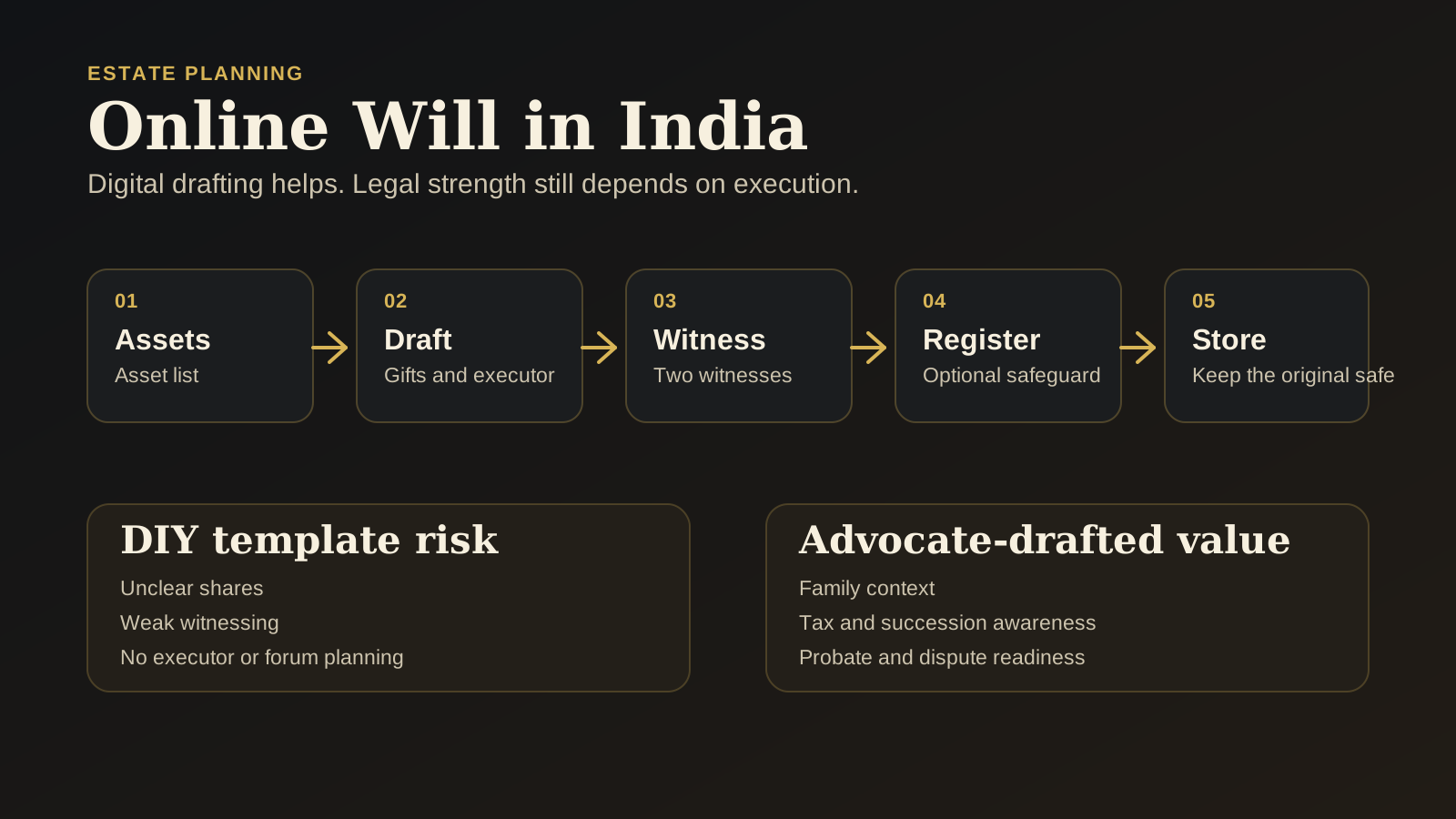
An online Will in India should not mean a downloadable template with names filled in. The useful online part is the intake: collecting family details, asset lists, nominations, intended beneficiaries, executors, exclusions and special instructions. The legal work is then to turn that record into a Will that can survive probate scrutiny and family challenge.
What makes a Will legally valid in India?
For most Hindus, Christians, Parsis and others governed by the Indian Succession Act, a Will must be signed by the testator and attested by two witnesses. The witnesses should see the testator sign or receive acknowledgement of the signature. The Will should identify the testator, revoke prior Wills, describe assets or classes of assets, name beneficiaries, appoint an executor and include a residuary clause for anything omitted.
Online Will maker vs advocate-drafted Will
DIY online Will makers often work for very simple estates, but Indian families rarely stay simple: nominations do not equal succession, jointly held property may need clarity, minor beneficiaries need guardianship clauses, and NRIs may need separate jurisdiction-specific Wills. Advocate drafting is useful when the Will must coordinate bank accounts, demat holdings, immovable property, business interests and family expectations.
Registration, witnesses and storage
Registration is not mandatory. A registered Will can still be challenged, and an unregistered Will can still be valid. The decision depends on age, health, family tension, property value, privacy concerns and practical access. Witness selection matters more than people assume: choose adults who are likely to be traceable later and who do not benefit under the Will.
One practical distinction matters in India: probate is compulsory only in certain notified territories and categories, while in many other places a Will may be acted on without a probate petition unless a dispute arises. That is another reason a drafting-stage review is useful: the document should be built for the forum in which it is most likely to be tested later.
NRI Wills for Indian assets
NRIs with Indian property usually benefit from an India-only Will that does not disturb their foreign estate plan. The drafting should avoid accidental revocation of an overseas Will, specify governing assets, and handle execution through consular or local attestation where needed.
Common drafting mistakes
- no residuary clause;
- beneficiary names without identifying details;
- executor not appointed or no alternate executor;
- conflict between nomination and Will language;
- unclear treatment of loans, jewellery or business shares;
- attesting witnesses who are beneficiaries.
The chamber's Will drafting intake captures the details needed before drafting. The broader practice page explains wills, succession and probate litigation.
Frequently asked questions
Can I make a Will online in India?
Yes. Instructions, asset details and drafts can be handled online. Execution still requires correct signing and attestation by two witnesses under the Indian Succession Act.
Is Will registration compulsory in India?
No. Registration is optional, but it may help evidentiary strength in some families and asset structures.
Can an NRI make an Indian Will online?
Yes. NRIs commonly prepare India-specific Wills for Indian assets, coordinated with their Will in the country of residence.
Need a Will drafted from a structured intake?
Use the Will drafting intake to share family, asset, beneficiary and executor details before the draft is prepared.
Start Will IntakeA will that is valid on paper can still fail in probate — have a wills and succession lawyer in Delhi review execution and attestation.